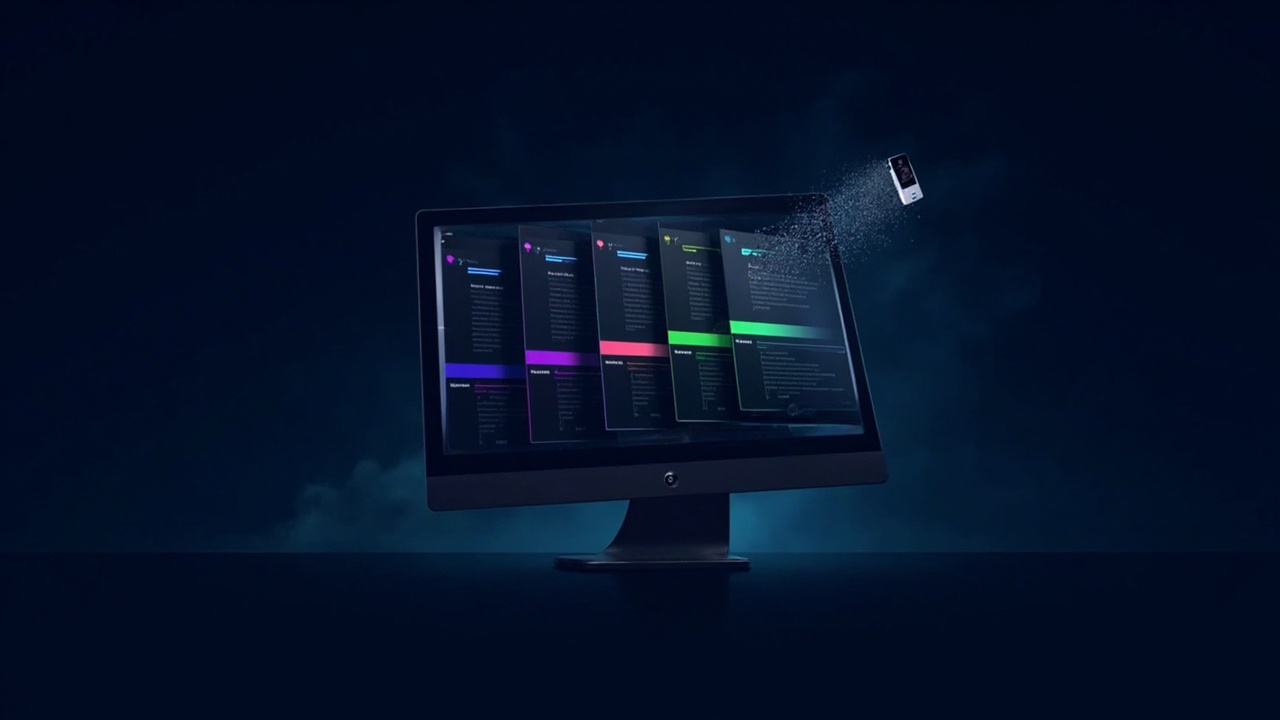
Orca: An Agent Development Environment Built for Fleets, Not Solos
There is a moment in every coding-agent conversation where the bottleneck stops being the model and becomes the human. You prompt. You wait. You read. You decide whether to retry, refine, or accept. The latency budget is dominated by you, not the agent. Multiply that by five competing drafts of the same change and you get an idea of what Stably AI shipped last week: Orca, an MIT-licensed Electron app whose central abstraction is the fleet — five to thirty parallel CLI agents, each in its own git worktree, each running on your real Claude/Codex/OpenCode subscription, all visible at once. The repo (stablyai/orca) crossed 88,000 stars this week, hit v1.4.223 on October 8, and pushes between five and fifteen commits to main per day. Reading the 12 KB AGENTS.md, the 28 KB docs/STYLEGUIDE.md, and the 119 KB docs/agent-skill-sharing-implementation-checklist.md is the most efficient way I know to learn what an “agent development environment” actually means when somebody bothers to build one.
The bet, in one sentence
Every existing agent CLI — Claude Code, Codex, OpenCode, Pi, Hermes, Cursor, Goose, Cline, Amp, the rest — is a solo instrument. Orca’s bet is that the next generation of work isn’t one agent in a terminal: it’s an agent fleet whose coordination surface, conflict resolution, and review mechanics need their own first-class IDE, the way spreadsheets needed Excel and not just a smart calculator.
What’s actually hard about running a fleet
Three things look trivial from outside and turn out to be where the engineering lives.
1. Worktree isolation that survives a crash. Git worktrees are easy to create. Making them survive an Orca crash, an OS reboot, and a stale daemon without leaving .git/worktrees/<branch>/ orphans is harder. The recent fix(terminal): settle a reply cut off by a server restart (commit 26460, October 10) and the preserve paired workspace ownership in terminal drag sources (26931) commit are both about recovering state across Orca’s own crashes, not about agent logic. A solo CLI does not need to solve this — it owns its own process. A fleet does, because each agent can hold a worktree open across an Orca restart, and the IDE has to track the truth of which branch is bound to which pane.
2. PTY routing that does not serialize the UI. Orca’s daemon is a multi-agent PTY multiplexer. The commit perf(daemon): send PTY output to main as raw bytes, not NDJSON (27006, October 10) replaced NDJSON framing with a raw byte stream for PTY data — a perf change driven by the fact that five parallel Claude Code sessions streaming at terminal scrollback rates were chewing through JSON encode/decode cycles on the daemon’s main thread. A solo agent’s PTY traffic is well under the threshold where this matters. A fleet’s is way over it.
3. The “fan out one prompt” semantics. The README’s flagship feature is a single sentence — “Fan one prompt across five agents, each in its own isolated git worktree — compare the results and merge the winner.” — but the implementation has to decide: do all five agents branch from the same commit, or from the same ref? Does each agent get its own copy of uncommitted changes, or share a base? When one agent finishes first, do the others get notified, or do they keep running until their own context budget is exhausted? The orchestration stub skill-stubs/orchestration.md makes the answer explicit: the runtime binary, not the doc, owns those decisions. “This file is a discovery stub, not the usage guide. The full, version-matched Orca orchestration reference is served by the orca binary itself — kept out of this file on purpose so it can never drift from the binary that will actually run your commands.” That’s the right call. The hard parts of fleet coordination are policy decisions (when to escalate, when to merge, when to kill a worker) that have to be made by the runtime, not by static prose.
The mechanism, in one CLI
The orca CLI is the second surface that makes Orca more than “VS Code with tabs.” Agents drive Orca via the CLI; humans drive it via the GUI. The discovery surface is the ORCA skills get orchestration command, which prints a compact, version-matched guide for the exact binary that’s about to run your commands. For conditional action gates — remote placement, uncertain release recovery, expanded DAG work — you load only the named reference:
ORCA skills get orchestration --reference references/<file>.md
# Or list the available reference names:
ORCA skills get orchestration --references
The orca worktree create, orca snapshot, orca click, and orca fill commands listed in the README are the visible top of a much larger IPC surface. The same Electron main process that renders the IDE accepts CLI input from agent processes via stdin, and the agent doesn’t have to know whether the next instruction came from a human click in a Chromium window or a tool call from a sibling agent. That’s the design move that distinguishes an ADE from “an IDE with a scriptable menu.” The IDE is the unified control plane. Every entry point — human, agent, mobile, SSH — ends up writing to the same IPC channels in the same daemon.
The AGENTS.md makes the design contract explicit:
Coordination requires real Orca runtime state; never substitute a non-Orca subagent tool.
This is the part where a lot of agent frameworks get sloppy. They let Claude Code, for example, call any sub-agent harness it has access to, and coordination state lives in scattered files or in the model context. Orca refuses that path: the agent can only coordinate through the Orca runtime, so the runtime sees every dispatch, every escalation, every worker_done, and every decision gate. You give up the freedom to mix-and-match harnesses inside a single coordinated DAG; you gain a runtime that can actually replay, audit, and resume the DAG.
What the numbers actually show
Eleven v1.4.x releases landed in the 14 days from September 27 to October 8, plus a separate mobile-android-v0.0.52. Commit volume on main between October 9 and October 10 alone was around 30 commits, with the typical mix of fix(native-chat): patches (UI/turn lifecycle), refactor(ipc): route ... through the host router refactors (multi-host abstraction — local desktop vs. SSH remote vs. mobile-relay-paired), and perf(<subsystem>): cleanups. The cadence is the right one for a project whose surface is moving every day.
A few concrete numbers worth quoting from the commit log and the README:
- 30+ supported CLI agents out of the box, including Claude Code, Codex, OpenCode, Pi, Hermes Agent, Grok, Cursor, GitHub Copilot, Antigravity, Amp, Devin, Goose, Auggie, Cline, Kilocode, Kimi Code, Kiro, Mistral Vibe, Qwen Code, Rovo Dev, Continue, Droid, MiMo Code, ZCode, DeepSeek Harness, Muse, Command Code, Charm, Codebuff, CodeBuddy, Autohand Code, Freebuff, oh-my-pi, OpenClaude.
- 5 platforms in the box: macOS (Apple Silicon + Intel), Windows (code-signed via SignPath), Linux (AppImage), iOS App Store, Android APK.
- 3 install channels for the desktop:
brew install --cask stablyai/orca/orca,yay -S stably-orca-bin, or direct.dmg/.exe/.AppImagefrom the releases page. - 12 KB
AGENTS.md, 28 KBSTYLEGUIDE.md, 119 KBagent-skill-sharing-implementation-checklist.md— a documentation stack that signals “we have to onboard a lot of agent authors, not just humans.” - MIT license, 1.3 MB repo size (without
node_modules—pnpm-lock.yamlalone is 564 KB), TypeScript end-to-end with Electron + Vite + oxlint + oxfmt, Yarn workspaces for the cloud relay, and a Ghostty-class terminal with WebGL rendering and scrollback that survives restarts.
The release cadence is the signal that matters most. A solo CLI that ships 11 minor releases in 14 days is misconfigured or frantic. An ADE that ships 11 minor releases in 14 days is reacting to the surface area: every supported agent’s CLI is a moving target, every new mobile-platform release of the companion is its own ship, and the IPC refactors (e.g. refactor(ipc): route filesystem git handlers through the host router, 27059) are the cost of supporting three different host topologies — local desktop, SSH remote, and the mobile-relay pair — through one control plane. You don’t see that churn in a single-agent harness.
The cross-host topology is the actually-novel bit
Most agent IDEs are a desktop app that wraps a single CLI. Orca is a desktop app that wraps many CLIs and keeps working when the desktop is on a different network from where the agents are running. Three host topologies share the same IPC:
- Local host — Orca’s daemon spawns the agent CLIs directly on the desktop’s CPU. This is the path the README’s screenshots show.
- SSH host — “Run agents on a beefy remote box with full file editing, git, and terminals — auto-reconnect and port forwarding included.” The
sshsubsystem handles host registration, provider set registration, and reconnection. The commitrefactor(ssh): register each SSH host's providers as one set(27044, October 10) is the kind of plumbing that only has to exist when one daemon is talking to N hosts instead of one. - Mobile-relay-paired host — The iOS and Android companion apps pair with the desktop over a relay service in
cloud/(its own pnpm workspace). The desktop daemon registers itself with the relay; the mobile app subscribes to notifications and can send follow-up prompts or read replies. The commitKeep MCP repository settings on their selected host(26859, October 10) and the IPC refactors are the cost of keeping the relay, the desktop, and any SSH host in sync about which MCP server is bound to which repo.
The fact that the same ORCA skills get orchestration command works on all three is the actual product. You can be on a train, ask your iPhone to “fan out this prompt to three Claude Code workers on my work Mac and two Codex workers on the SSH box,” and the dispatch, the worktree creation, and the result fan-in all happen in the same runtime. A solo CLI cannot do that because it has no runtime to coordinate them.
Trade-offs and what it doesn’t fix
It is not a model. Orca does not choose which agent to dispatch to. It does not arbitrate quality between competing drafts. It does not decide which of the five parallel outputs is best. The human still has to pick a winner, edit a losing draft, or send a follow-up. If you were hoping that “fleet” meant “model self-organizes,” this isn’t that. It’s IDE plumbing.
The host router is a tax on every refactor. Every new IPC channel has to be designed for three topologies (local, SSH, mobile-relay) and two transports (native Unix sockets vs. the relay’s WebSocket). The recent commit flood of refactor(ipc): route <X> through the host router patches (27059, 27066) is the visible cost of that abstraction. Solo harnesses don’t have this; the harness and the IDE are the same process. If you adopt Orca, you’re signing up for a layer of indirection that has to be maintained every time a new transport ships.
Solo agents get no benefit from the fleet surface. If you only ever run one agent at a time, Orca is a heavier Claude Code wrapper. The Ghostty-class terminal and the design-mode browser are nice, but VS Code with the Claude Code extension gets you 80% of the value at 20% of the install cost. The product’s leverage is in the parallel-and-compare workflow, and a solo user pays the install weight for that leverage without using it.
The mobile companion requires a relay. The relay service is in cloud/ and the iOS/Android apps pair through it. If the relay is down, the phone is a paperweight. The README does not currently document a self-hosted relay, and the cloud/README.md is the only entry point. The privacy-and-telemetry docs hint that anonymous usage data is sent by default; you should read them before pointing this at a closed-source repo.
Where I’d want to see it go
Three things would make this a category-defining ADE rather than a really good one. (1) A first-class merge primitive that takes two or more worktree branches and a CI result and decides which to fast-forward — today the human clicks a button. (2) Cost-aware dispatch: the runtime knows each agent’s rate-limit state (the README mentions “see Claude and Codex usage and rate-limit resets, and hot-swap accounts without re-logging in”), but it does not yet route the next prompt to the worker with the most remaining budget. (3) Replayable DAGs: the runtime sees every dispatch, so a orca replay <dag-id> that re-runs a previous orchestration with new agent binaries is well within reach — the audit trail is already there in the IPC log, just not exposed as a command.
The agent-harness lane is saturated right now with personality libraries and skill collections. Orca isn’t trying to win that lane. It’s building the IDE underneath all of them, on the bet that a future where you genuinely run five agents in parallel — and don’t lose track of which one is doing what — is going to need a control surface that a terminal alone can’t be.
References and where to dig further
stablyai/orcaon GitHub — repo, 88k★, MIT, v1.4.223 (Oct 8, 2026), 12 KBAGENTS.mddocs/STYLEGUIDE.md— 28 KB UI/design system rules; thepnpm run lint:design-systemgate is what stops a contributor from restyling acomponents/ui/primitive by handdocs/agent-skill-sharing-implementation-checklist.md— 119 KB; the contract between the daemon and the agent skill authorsskill-stubs/orchestration.md— the discovery stub; the real reference is served by the binarycloud/README.md— the mobile-relay workspace; the only documented deploy path for the iOS/Android companion- The README’s Supported Agents section — the live list of 30+ harnesses; the daily release cadence and the IPC refactors are the cost of keeping that list honest
Comments
Powered by GitHub Discussions via Giscus. Sign in with GitHub to leave a comment.