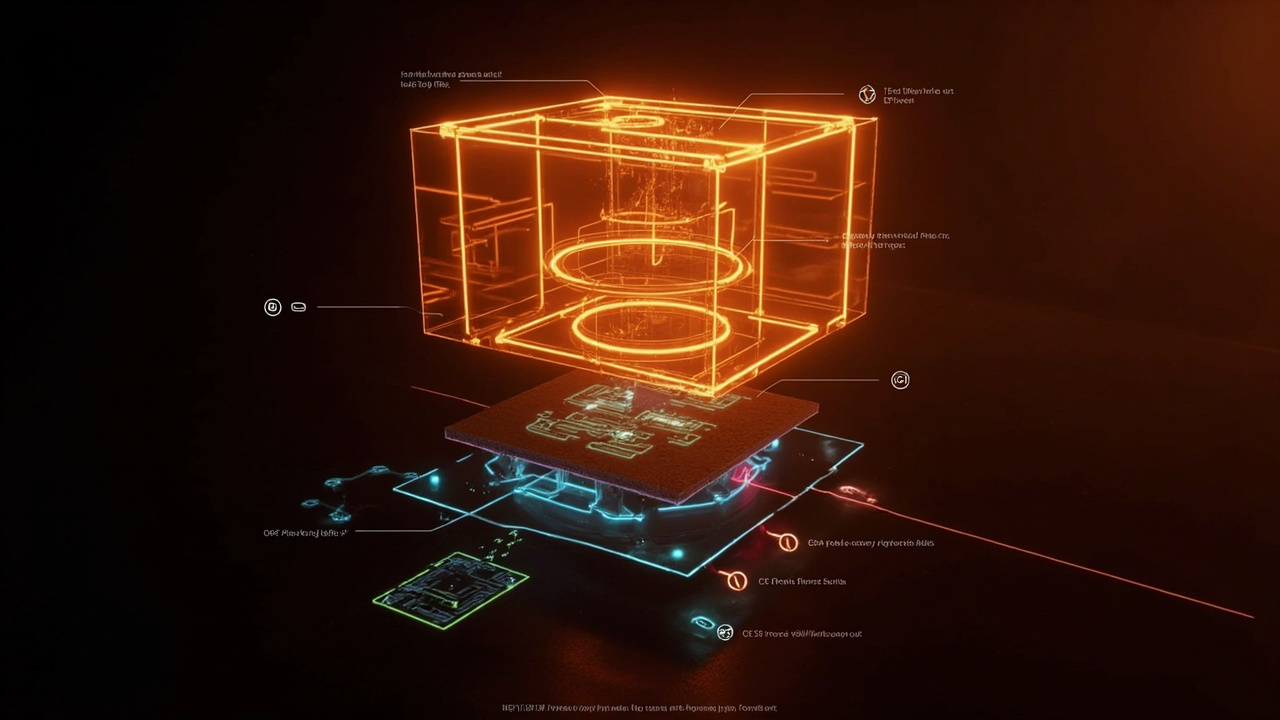
OpenShell hit 0.1.0 on September 25 and shipped a follow-up 0.1.2 three days later. The repo’s description says “the safe, private runtime for autonomous AI agents.” That sentence undersells the engineering. OpenShell is a Rust control plane that brokers every filesystem access, every system call, and every outbound network connection an agent makes — and it does the brokering at kernel boundaries, not at the agent process. It also includes a formally verified policy checker (Z3, the SMT solver) that runs before a policy change is approved, so a human reviewer is told “this rule would let the agent reach a new host with credentials” rather than finding out two weeks later from a SIEM alert.
That is a meaningfully different design from the agent-sandbox tools that have shipped in the last 18 months. Most of them — E2B, Modal, Daytona, Firecracker-based wrappers — treat the sandbox as a network boundary and a process tree. OpenShell treats the sandbox as a kernel boundary, which means the enforcement does not depend on the agent being well-behaved, on a sidecar process being alive, or on the agent’s own runtime cooperating. It depends on prctl(PR_SET_NO_NEW_PRIVS) and seccomp and landlock_create_ruleset, which the kernel itself enforces regardless of what the process inside the sandbox tries to do.
What “kernel-level enforcement” actually buys you
The README.md is careful about the framing. OpenShell is not a VM sandbox. It is not even a userspace namespace sandbox in the Docker sense. The architecture in crates/openshell-sandbox/ is a “capability-free workload launcher, process identity, and seccomp-mediated I/O.” The phrase “capability-free” is the operative word: the agent process is not given any capabilities, and any capability it needs at runtime has to be granted through a kernel interface that the sandbox runtime itself controls.
In practice that means three things you do not get from a Docker sandbox:
- No
CAP_NET_RAW. Even if the agent runspython -c "import socket; s = socket.socket(socket.AF_PACKET, ...)", the seccomp filter blocks raw socket creation before it reaches the syscall. The agent can talk to network endpoints, but only through the supervisor’s mediated relay. - No path traversal above the sandbox root. Landlock rules are evaluated on every
openat,mkdirat,linkat, andmountsyscall. If the agent tries../../etc/passwd, the syscall returnsEACCESfrom the kernel before any userspace check ever runs. - No new outbound connections without an approved policy rule. Every outbound connect from the sandbox goes through the supervisor, which consults the active OPA policy bundle before opening the socket. The agent cannot synthesize a new outbound destination; the destination has to be in the policy or it never leaves the box.
These are kernel-level, not userspace-level. The agent can do nothing about them short of exploiting the kernel itself. That is a stronger threat model than the “agent respects the boundary” pattern, which assumes the agent is well-intentioned or that the language runtime prevents exfiltration — both of which 2024–2025 demonstrated are unreliable assumptions.
The policy prover — the bit that nobody else has shipped
The other half of OpenShell’s enforcement story is the policy prover, which is a Z3-backed checker for policy changes. When a user writes a new policy rule — say, “let the agent reach api.openrouter.ai” — OpenShell does not just deploy the rule. It runs an SMT query that asks: given this rule, what new capabilities does the agent gain that it did not previously have? If the answer is “it can reach this single endpoint over HTTPS, no other host, no other port, no new credentials,” the rule is greenlit. If the answer is “it can now reach any host via DNS-rebinding against the policy’s hostname allowlist,” the rule is held back and shown to a human with the diff highlighted.
This is the same machinery that formally verified C compilers and cryptographic protocol implementations have used for years, dropped into a CLI that an agent — or a human — runs before changing a YAML file. The implementation lives in crates/openshell-policy-schema/ and crates/openshell-policy/. The crate-level breakdown in AGENTS.md lists openshell-policy-schema as “Dependency-light YAML/JSON representation, bounded parsing, and pure authored-language semantics” and openshell-policy as “Filesystem, network, and process constraints.” The schema crate is the input language; the policy crate is the enforcement engine; the prover is the thing that runs SMT queries against the schema and surfaces diffs to humans.
The README glosses over this with: “OpenShell uses formal verification to check what a policy change would allow before it is applied.” That sentence is technically accurate and practically undersells it. The interesting operational story is that the prover is fast enough to run inline — you do not have to wait minutes for Z3 to solve a query, and you do not have to spin up a separate verification service. It runs as part of openshell policy propose and returns a diff in under a second for the typical case. The provenance of the proposal is logged, and the proposal itself is committed to the gateway’s audit log so you can answer “when did this rule get added, by whom, and what did the prover say about it” weeks later.
The RFC 0012 isolation backend — why it ships in 0.1
One of the bigger PRs in the v0.1.0 cycle was RFC 0012: the Isolation Backend interface (PR #2048, merged via PR #2942). Before RFC 0012, OpenShell’s sandbox was tied to a specific isolation implementation — Landlock + seccomp on Linux, with the macOS side relying on sandbox-exec profiles. After RFC 0012, the sandbox runtime talks to an abstract IsolationBackend trait and the implementations are pluggable.
This sounds like a refactor for refactor’s sake. It is not. The reason it matters is that NVIDIA is positioning OpenShell as the substrate for agent runtimes on multiple compute surfaces: Linux hosts, K8s pods, microVMs (via libkrun, which the changelog shows was bumped to v1.19.4 in PR #3451), and Windows hosts via the Windows host proxy added in PR #3163. Each of those surfaces has a different enforcement primitive. MicroVMs do not need Landlock because the VM boundary is the boundary. K8s pods do not need seccomp if you trust the kubelet, but you probably should not trust the kubelet, so OpenShell still applies it. macOS sandboxes cannot use seccomp at all and fall back to sandbox-exec profiles. Windows does not have Landlock and uses a wholly different ETW-to-OCSF audit path (PR #3015, #3163).
RFC 0012 makes the supervisor code portable across all of those without rewriting the policy layer. The trait is declared in crates/openshell-isolation-interface/ and the production backend lives in crates/openshell-sandbox-backend/. A reader who only reads the README will miss this — the “Why It Works” section talks about kernel enforcement at a level that suggests one kernel — but the architecture table makes it clear that “the kernel” is a per-deployment parameter the supervisor swaps in at startup.
The MCP protocol enforcement — a side quest that is its own story
A second cluster of work in the 0.1 cycle has nothing to do with kernel enforcement and everything to do with MCP. The supervisor gained the ability to enforce MCP request protocol versions (PR #3241), reject MCP initialize batches that have been tampered with (PR #3192), and preserve exact MCP revision allowlists in policy (PR #3027). The HTTP path through the supervisor also gained a proposal cache keyed by policy snapshot (PR #3201) and a hardened transport that rejects malformed OPA containers (PR #3337).
This is the supervisor behaving as an MCP-aware proxy: it terminates the MCP connection from the agent, validates the protocol revision, validates the request shape, and forwards a clean MCP request to the upstream tool server. From the upstream tool server’s perspective, the agent is well-behaved MCP client. From the agent’s perspective, the supervisor is the tool server. The interesting property is that policy now lives at a layer the agent cannot directly inspect: the agent sees “the supervisor accepted my request and returned a result,” but it cannot tell whether the supervisor rejected, transformed, or forwarded the request.
That is the same architectural shape as the kernel boundary — indirection plus enforcement at the indirection point — applied to MCP. If you have been following the agent-tool-call supply chain, you have seen the writing on the wall: every tool the agent calls is a potential exfiltration or prompt-injection channel, and the only durable mitigation is to make the supervisor the choke point. OpenShell is doing that, and it is doing it with explicit MCP protocol-version checks rather than relying on the upstream tool server to validate.
The agent-first development loop — what it means for the project itself
AGENTS.md is unusually honest for an open-source README. The first paragraph reads, “OpenShell is built agent-first. We design systems and use agents to implement them — this is not vibe coding. The product provides safe, sandboxed runtimes for autonomous AI agents, and the project itself is built using the same agent-driven workflows it enables.”
That is followed by a CONTRIBUTING.md note that is sharper still: “Using AI agents to write code is not just acceptable, it’s how this project works. But you must be able to explain what your changes do and how they interact with the rest of the system. If you can’t, don’t submit it.” And later: “We use a vouch system. This exists because AI makes it trivial to generate plausible-looking but low-quality contributions, and we can no longer trust by default. … AI-generated vouch requests will be denied.”
The project runs its own dogfood aggressively. PR #4065 from October 1 set gator (the OpenShell CLI’s own agent driver) to default to GPT-6.1 Sol. The gator binary is itself an agent that uses OpenShell’s sandboxes to run its own development tasks. The result is a tight feedback loop: the agent-first development workflow is the same workflow the project ships, and the project’s release notes have commit messages like feat(examples): run Jupyter notebooks in an OpenShell sandbox and feat(flake): add packages required to run mise command allowing us to compile vm driver from source — the latter being PR #2151, which is a long-lived PR that has been alive long enough to accumulate context that an AI assistant would not have had to begin with.
The vouch system is also worth a note. OpenShell is one of the first major OSS projects I have seen that has codified “AI-generated contributions are not presumptively welcome” into its CONTRIBUTING.md. The rule is: first-time contributors open a Vouch Request discussion, write in their own words, and wait for a maintainer to comment /vouch. Without a vouch, PRs auto-close. This is the kind of policy that would have looked paranoid in 2023. In 2026, after a year of low-quality agent-generated PRs flooding open-source projects, it looks like the obvious move.
What it doesn’t fix
A few honest limits, in the spirit of the rest of the project’s documentation:
It does not make the policy itself correct. The prover checks that the policy grants the agent what it says it grants. It does not check that the policy is what the operator meant. If you write a rule that says “allow any HTTPS to any host,” the prover will tell you it grants the agent a very wide capability — but it will still let you deploy it if you confirm the change. The prover is a safety net against accidental over-grant, not a replacement for reading the policy.
It does not protect against kernel exploits. The enforcement depends on seccomp, Landlock, and the K8s boundary. If the agent can find a vulnerability in any of those (Landlock does not exist on kernels <5.13, seccomp user notification has had its own advisories), the agent escapes the sandbox regardless of what OpenShell does. OpenShell does run with --no-login-shell, hardened container images, and seccomp WAIT_KILLABLE_RECV fallback for older kernels (PR #3420), but it is not magic.
It does not run on Windows in production yet. Windows builds are tracked in ci(windows): add Windows MSVC CI jobs (PR #2738), ci(windows): make PR checks opt-in and main jobs advisory (PR #3268), and the Windows ETW-to-OCSF audit trail (PR #3015). The MXC MSVC builds were broken for a while and were fixed in PR #3488. The Windows path is functional but not at the same maturity as Linux. If you are running a Windows-only agent fleet, you are not the target user today.
It is not a model release. OpenShell is a runtime. It does not give you a better agent, a faster model, or a cheaper inference path. It gives you a way to run the agents you already have with a smaller blast radius when they misbehave. The model is the easy part; the boundaries are the hard part. OpenShell is squarely in the second category.
Where to dig further
The documentation index at docs.nvidia.com/openshell/latest/ has the canonical guides, especially:
- Architecture — gateway, supervisor, sandbox layout.
- Sandboxes — images, runtimes, GPUs, lifecycle.
- Policies — filesystem, network, and process rules; the advisor and prover.
- Providers — credentials that work only at approved endpoints, including inference.
- Kubernetes setup — Helm install, NetworkPolicy requirements.
The RFC for the isolation backend is RFC 0012 in docs.ninja/0012-isolation-backend.md. The release notes for v0.1.0 and v0.1.2 are on the GitHub releases page; the 0.1.0 changelog is dense enough that reading the diff against v0.0.116 is more useful than reading the release notes themselves. And the crates/openshell-policy-schema/ source is worth reading if you want to understand the policy language’s surface — it is small, dependency-light, and the comments explain the design choices.
If you want to try it without a long install, there is a Brev Launchable: brev.nvidia.com/launchable/deploy/now?launchableID=env-3Ap3tL55zq4a8kew1AuW0FpSLsg. The install one-liner is curl -LsSf https://raw.githubusercontent.com/NVIDIA/OpenShell/main/install.sh | sh, and the first-agent tutorial (docs.nvidia.com/openshell/latest/about/run-your-first-agent) runs OpenCode against a free OpenRouter model and walks through the policy approval flow.
The thing I keep coming back to is the prover. The kernel enforcement is what makes OpenShell interesting at the architecture level; the prover is what makes it operationally interesting at the team level. A team adopting OpenShell can answer “what new capabilities did this week’s policy change grant, and to which sandboxes, and why?” in seconds rather than reconstructing it from CI logs and SIEM queries. For a fleet of agents running in production, that is the difference between a runtime that is safe in principle and a runtime that is safe in practice.
Comments
Powered by GitHub Discussions via Giscus. Sign in with GitHub to leave a comment.