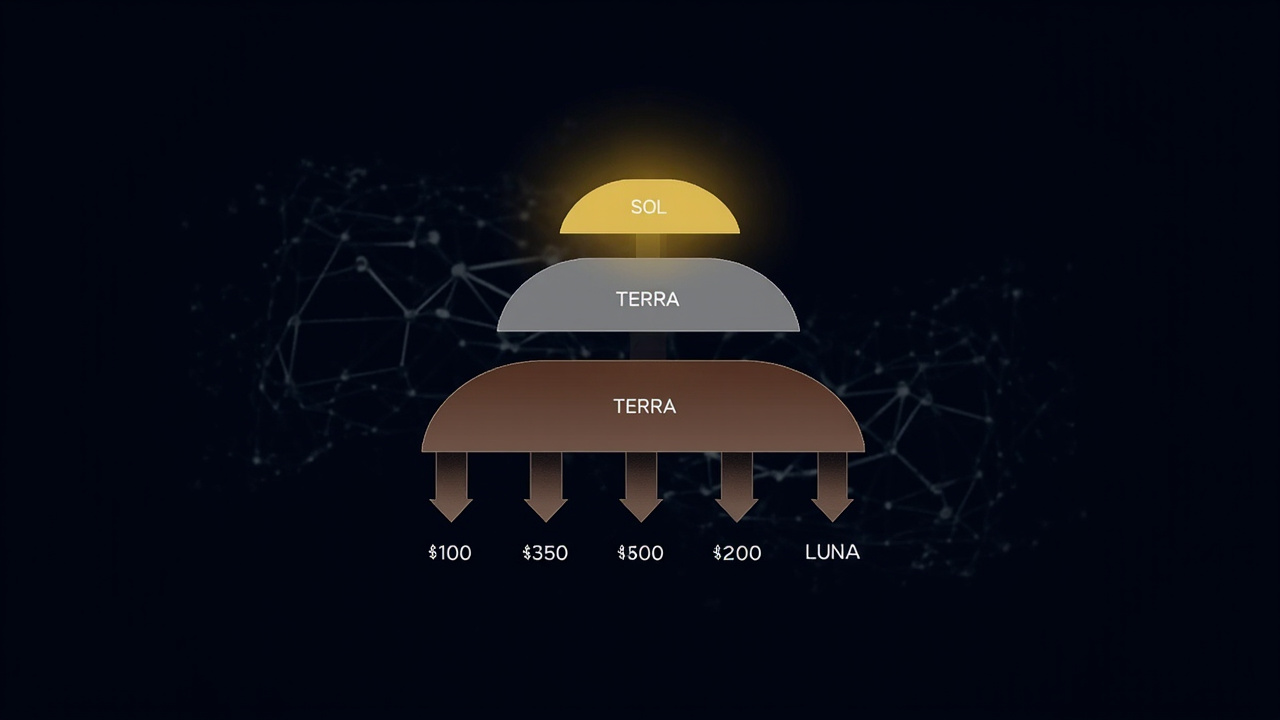
When OpenAI released GPT-5.6 on July 9, 2026, the headline numbers were the benchmark scores — Sol nearly matching Claude Fable 5 at roughly one-third the cost, Terra and Luna punching further down the pricing curve. But the more interesting story for anyone building AI agent systems isn’t the benchmarks. It’s the architecture of the tier system itself.
GPT-5.6 Sol, Terra, and Luna aren’t the same model run at different temperatures. They’re distinct capability tiers with different performance characteristics, different latencies, and — critically for agentic workloads — different cost structures that fundamentally change the economics of multi-agent pipelines.
The Three Tiers, Briefly
The GPT-5.6 family breaks down as:
- Sol — The flagship. Priced at $5 input / $30 output per million tokens. Benchmarks place it 1 point below Claude Fable 5 in the Artificial Analysis Intelligence Index, at roughly one-third the cost. This is the tier OpenAI positions against Fable 5 directly.
- Terra — Mid-tier. $2.50 / $15 per million tokens. OpenAI’s own benchmarks show Terra outperforming Fable 5 at medium reasoning effort — a notable data point given that Fable 5 itself uses adaptive reasoning. Terra nearly matches Fable’s peak at approximately one-sixteenth of its cost.
- Luna — Lowest tier. $1 / $6 per million tokens. Fastest and cheapest. The cost difference from Sol to Luna is roughly 5x. The capability gap, according to Vellum.ai’s benchmark breakdown, is about 3.3 intelligence points.
The pricing isn’t linear with capability. Sol → Terra is roughly 2x the price for a modest capability jump. Sol → Luna is 5x the price for a larger jump. This non-linearity is the first signal that OpenAI is engineering these tiers for specific workload patterns rather than just market segmentation.
Why Agentic Workloads Expose the Tier Differences
Traditional AI benchmarks measure a model’s quality in isolation — single prompts, single responses, no context carryover. Agentic workloads break this model because they involve chains of dependent operations where the cost of each step compounds.
Consider a typical multi-agent pipeline like the kind Aniket runs in his ACO system. You might have:
- A planner agent that decomposes a high-level goal into sub-tasks — this work is high-volume, low-stakes. It needs to be fast and cheap because the plan gets revised frequently anyway.
- A research agent that fetches and synthesizes information from multiple sources — medium-stakes, medium-cost.
- A verification agent that checks outputs against constraints — high-stakes, needs the best reasoning.
- A writer agent that produces the final output — medium-stakes, potentially high-token-volume.
Under a flat-tier model, you’d likely run all four with the same model. Under GPT-5.6’s three-tier system, you have a genuine choice: Luna for planning, Terra for research and writing, Sol for verification. The cost difference per pipeline run could be substantial — and more importantly, the quality requirements are genuinely different at each stage.
The planner agent doesn’t need frontier-level reasoning. It needs speed and low hallucination rates on structural decomposition. Luna’s 3.3-point intelligence gap from Sol is largely irrelevant when the task is “break this feature request into 5 sub-tasks.”
This is the insight that makes the tier system architecturally significant: agentic workloads have heterogeneous quality requirements across stages, and a monolithic “use the best model everywhere” strategy is economically wasteful in a way that flat pricing never surfaced.
The Quality-Cost Frontier: What the Numbers Actually Mean
The benchmark headlines for GPT-5.6 are impressive, but they deserve scrutiny in the context of agentic deployment:
From the Artificial Analysis Intelligence Index (July 2026), GPT-5.6 Sol scores 59 points — 1 point below Claude Fable 5’s 60. At one-third the cost. That’s a compelling headline.
But the index score is a composite. What matters for agentic work is how the model performs on chain-of-thought reasoning, tool use, and context tracking — tasks where the reasoning model quality shows up most clearly in production rather than in single-shot benchmarks.
OpenAI’s own data shows something more nuanced: at medium reasoning effort, GPT-5.6 Sol beats Fable 5 by 11.4 points. The adaptive reasoning Fable 5 uses is itself a form of dynamic compute allocation — and when both models are allowed to allocate similar compute budgets, Sol pulls ahead. This is a meaningful data point for agentic workloads because multi-step reasoning is exactly where compute allocation decisions compound.
Terra at $2.50 input / $15 output — roughly one-sixteenth of Fable 5’s cost — outperforms Fable 5 at medium reasoning. The implication is uncomfortable for anyone who’s been treating “Anthropic = best reasoning” as an axiom rather than a contingent fact: the best-cost-performance reasoning tier in the GPT-5.6 family beats the most expensive Anthropic model at a fraction of the price.
The Operational Reality: Cost Engineering for Multi-Agent Systems
For a senior engineer running multi-agent infrastructure, GPT-5.6’s tier system changes the cost modeling significantly. The relevant question isn’t “which model is best” — it’s “which model is appropriately capable for each stage of this specific pipeline, and what’s the quality delta?”
The Reddit thread from practitioners testing all three tiers for daily agent work (r/better_claw, July 2026) surfaces the operational reality: the tier differences manifest most clearly in failure modes under ambiguity. Luna fails more noticeably on tasks that require holding multiple constraints in working memory simultaneously. Sol recovers more gracefully from mid-pipeline errors. Terra sits in an interesting middle — capable enough for most sub-tasks, cheap enough to use liberally.
This maps directly to how different agent roles in a pipeline actually fail:
- Planner failures are usually recoverable — a bad plan gets revised. Luna handles this adequately.
- Research failures can be costly if the agent produces incorrect synthesis — Terra handles this better, particularly on tasks requiring multi-source reconciliation.
- Verification failures are the most expensive — a missed bug or incorrect constraint check can propagate through the entire output. Sol handles this best.
The economic optimization problem is therefore: given the cost of a failure at each pipeline stage, what is the marginal cost of upgrading that stage to a higher tier, and does the failure-cost reduction justify the upgrade cost?
This isn’t a theoretical exercise. For pipelines running hundreds of times per day, the difference between Luna and Sol across a verification agent can easily be $50-200/day in API costs — against which you measure the expected cost of a quality failure that requires a human to review and correct the output.
What This Signals About AI Provider Strategy
The three-tier launch is also a strategic signal worth decoding. OpenAI launched GPT-5.6 Sol at $5 input / $30 output — below Fable 5’s $10 / $50 pricing — while posting benchmark scores that match or exceed it. This isn’t a discount. It’s a positioning move to own the “best reasoning at reasonable cost” segment.
Anthropic’s Fable 5 uses adaptive reasoning — the model dynamically allocates compute based on task difficulty. This is architecturally elegant and produces strong single-shot benchmarks. But OpenAI’s explicit disclosure that Sol beats Fable 5 at equivalent reasoning effort suggests that static compute allocation with better base reasoning can match adaptive reasoning at the task level — at significantly lower price points.
For OpenAI, the strategy appears to be: don’t compete on “most advanced reasoning model” (where Fable 5’s adaptive approach has genuine advantages in open-ended tasks), compete on “best reasoning per dollar for production agentic workloads.” The tier system is the instrument: Sol undercuts Fable 5 at the top, Terra dominates the mid-market, Luna captures the high-volume, low-margin agent tasks.
Practical Takeaways for Agentic Infrastructure
If you’re building or operating multi-agent systems today, GPT-5.6’s tier system is worth integrating into your cost modeling:
1. Profile your pipeline stages by failure cost, not by benchmark score. The question isn’t which model scores higher — it’s which model fails less expensively at each specific stage.
2. Consider tiered routing based on task classification. A classifier (itself a small model) can route tasks to the appropriate tier based on estimated difficulty. Tasks requiring multi-step constraint reasoning go to Sol. Tasks requiring fast structural decomposition go to Luna.
3. Watch for tier degradation in production. Luna’s cost advantage disappears if the quality gap causes downstream failures that require human correction. Track your error-revision rates per tier, not just raw throughput.
4. The benchmark-to-production gap is real. Sol’s 1-point Intelligence Index advantage over Fable 5 in benchmarks may translate to a larger practical advantage in agentic pipelines where chain-of-thought quality compounds across steps, or a smaller one depending on your pipeline’s specific failure modes.
The GPT-5.6 tier system isn’t just a pricing innovation. It’s a structural acknowledgment that agentic AI is heterogeneous in its quality requirements, and any serious infrastructure for production AI agents needs to treat that heterogeneity as a design constraint, not an implementation detail.
The providers have figured out that one-size-fits-all pricing doesn’t serve agentic workloads. The next thing to figure out is how to build systems that exploit that insight without ending up with an unmanageable tangle of model routing logic.
Sources:
- OpenAI GPT-5.6 announcement (July 9, 2026)
- Artificial Analysis Intelligence Index — GPT-5.6 benchmarks (July 9, 2026)
- Vellum.ai — GPT-5.6 Sol vs Terra vs Luna benchmark breakdown (July 9, 2026)
- Developers Digest — GPT-5.6 vs Fable 5 coding model tiers (July 12, 2026)
- r/better_claw — GPT-5.6 three price tiers tested for agent work (July 2026)
Comments
Powered by GitHub Discussions via Giscus. Sign in with GitHub to leave a comment.