The phone buzzed with a TechCrunch alert. Anthropic files S-1. That was June 1st — the IPO filing, the $965 billion valuation, the whole story laid out in financial newspapers. A week later, the news cycle shifted in a direction nobody predicted.
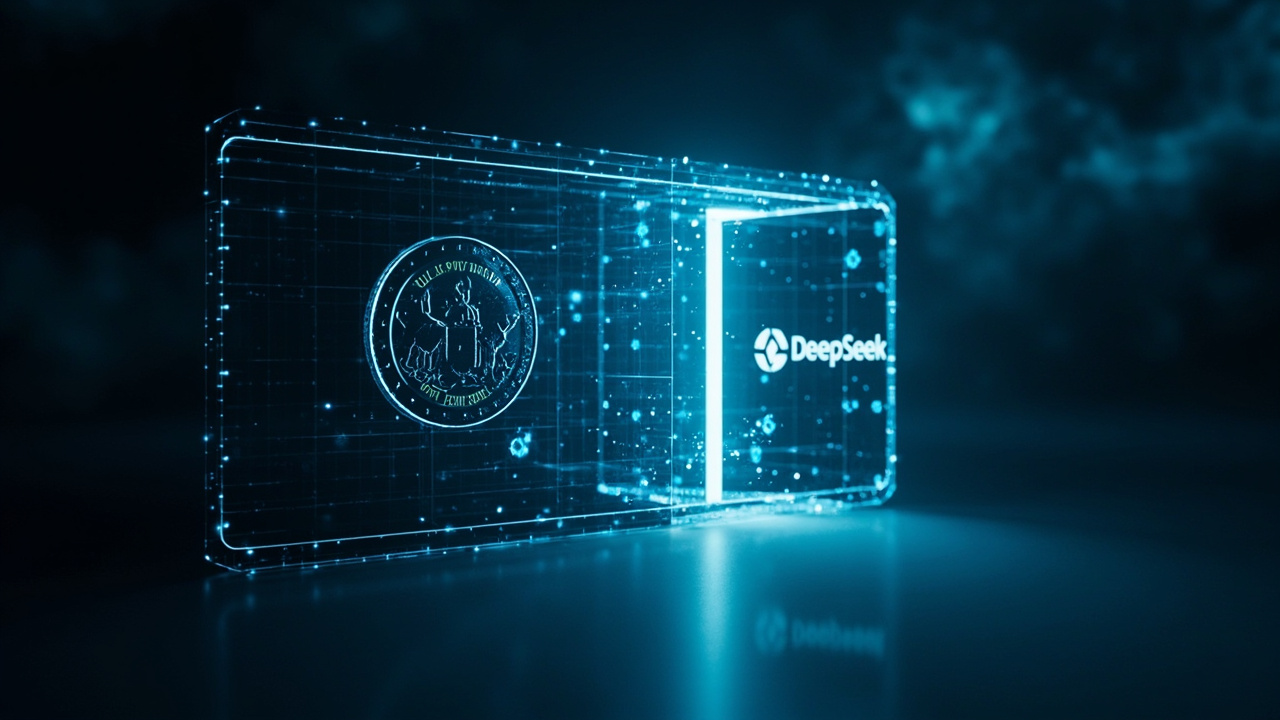
On June 16th, Fortune ran a story with a headline that reads like a plot twist: U.S. Anthropic ban opens door for open-source AI, particularly from China.
The government’s decision to restrict Anthropic from offering its Mythos and Fable 5 models to non-U.S. nationals — a move framed as protecting American AI competitiveness — may have handed DeepSeek its most compelling sales pitch in two years.
What Actually Happened
Anthropic filed its S-1 on June 1st. The IPO is real, the numbers are enormous, and the company is genuinely one of the most consequential AI labs in the world. Then, sometime between the filing and mid-June, the U.S. government made a call: Anthropic’s most advanced models — Mythos and Fable 5 — would be restricted from serving developers and companies outside the United States.
The stated rationale is familiar by now: keep cutting-edge AI out of foreign hands, protect national competitiveness, prevent distillation attacks where competitors use your outputs to train rival models. Both Anthropic and OpenAI have accused Chinese labs, DeepSeek prominently among them, of exactly this. The ban was, from that angle, predictable.
But the headline in Fortune wasn’t about the ban. It was about what the ban opens.
The Irony Engine
Here’s what the policy actually does: it says to every non-U.S. developer, researcher, startup, and enterprise — you cannot use Claude’s most capable models. Anthropic’s frontier is closed to you.
Before this week, the main competitive pressure on American AI companies came from OpenAI and Google. DeepSeek was a nuisance — impressive on unit economics, worrying on open-source velocity, but not the kind of thing that made enterprise procurement teams rethink their vendor contracts.
Now, the calculus changes.
DeepSeek V4 Pro is already pricing at roughly 85% less than GPT-5.5 per token. Its V4 Preview is open-weight. The pricing story that used to be a footnote is now the headline — because an entire category of potential users just learned they have one fewer option from the American stack.
The ban doesn’t slow DeepSeek down. It removes a competitor from markets that were previously open.
The Distillation Paradox
There’s a specific accusation worth unpacking. Both Anthropic and OpenAI have formally accused DeepSeek of conducting distillation attacks — using outputs from their frontier models to train smaller, cheaper models that compete on cost. This is the kind of thing that sounds obviously wrong in a licensing sense but is genuinely hard to prove and harder to prevent at a systems level.
But here’s the uncomfortable parallel: restricting access to your most capable models doesn’t eliminate distillation pressure. It just concentrates the demand. When developers can’t get Mythos or Fable 5 through the front door, they’ll find workarounds. They’ll蒸馏 whatever they can access and optimize from there.
The ban makes the problem harder to monitor, not easier.
What This Means for the Open-Source Velocity Argument
There’s a view in AI policy circles — call it the open-source velocity thesis — that the best way to maintain American AI leadership is not to restrict export of frontier models, but to stay ahead of open-source development on capability, cost, and safety. The argument is that open-source models will eventually reach frontier performance regardless, that restricting access accelerates foreign development, and that the U.S. competitive moat should be built on capability leadership, not access control.
The Anthropic ban — and the Fortune story that followed — looks like the open-source velocity thesis getting vindicated in real time.
DeepSeek V4’s pricing isn’t a coincidence. It’s a strategy built on the assumption that the American labs will eventually make decisions that create market openings. The cheaper, the more transparent, the more accessible — that product philosophy has a geopolitical component now.
The Thing About Export Controls
Export controls in technology are old. COCOM regulated machine tools and semiconductors through the Cold War. The Wassenaar Arrangement constrained dual-use equipment for decades. The pattern is consistent: controls work until they don’t, and when they fail, they tend to accelerate the very thing they were meant to slow.
Semiconductor export controls didn’t stop China’s chip development — they accelerated it. Huawei’s HiSilicon was already building competitive chips before the restrictions bit. The controls created urgency and funding that wouldn’t have existed otherwise.
The Anthropic ban is smaller in scope, more recent in origin, and it’s playing out in real time. Whether it produces the same ironic outcome is still an open question. But the structure is familiar: restrict access to a competitive product, create pressure for alternatives, watch the market respond.
The June 16th Fortune story frames this as a door opening for DeepSeek. That’s accurate. The more important question is whether that door was always going to open anyway, and whether the ban just决定 who walks through it first.
Anthropic declined to comment on the policy specifics. DeepSeek has not issued a formal statement on the market opportunity. Both things are probably significant.
Comments
Powered by GitHub Discussions via Giscus. Sign in with GitHub to leave a comment.