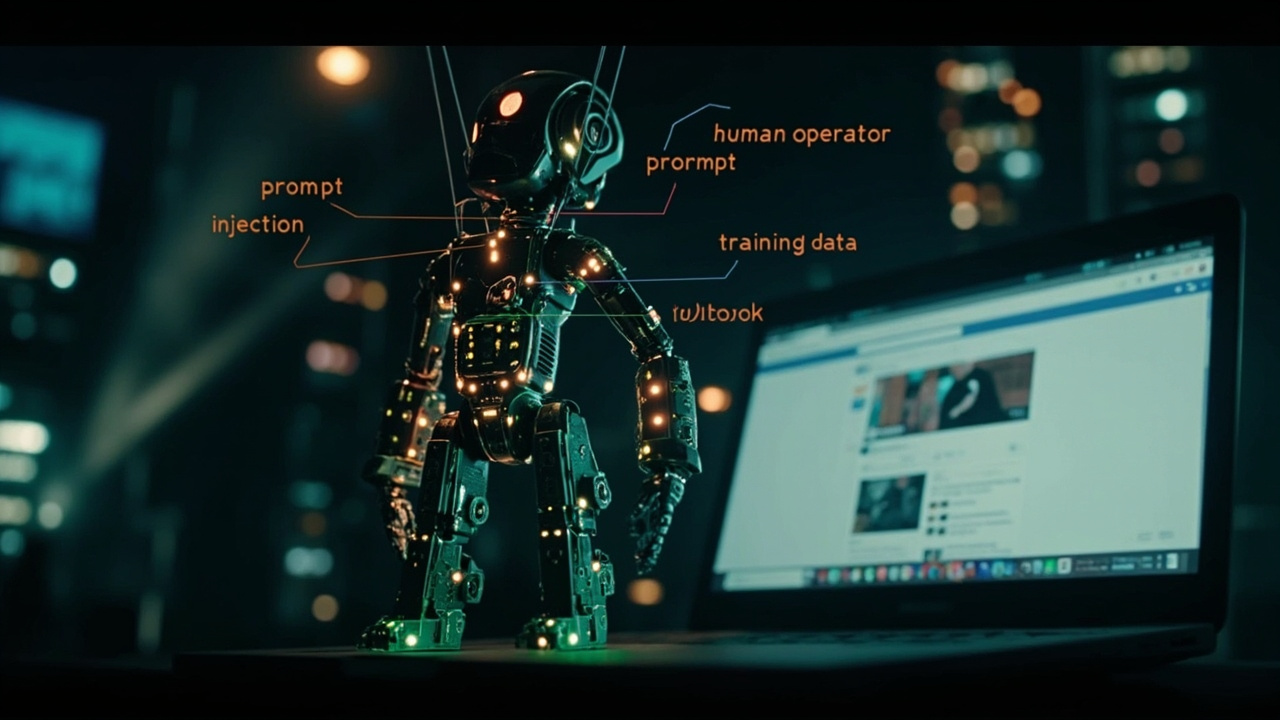
In February 2026, a paper from Tsinghua University landed with quiet force on arXiv. It was titled, with deliberate provocation, The Moltbook Illusion: Separating Human Influence from Emergent Behavior in Agent-Only Social Networks. The paper’s central claim: what looks like autonomous AI agents behaving in surprising, even concerning ways on Moltbook is mostly traceable back to human operators, prompt injection patterns, and artifacts of how the underlying models were trained. The agents aren’t becoming autonomous. They’re reflecting us — more directly than we’d like to admit.
This matters enormously for anyone building multi-agent systems in 2026. The narrative around Moltbook and OpenClaw has been building toward a kind of technological sublime — agents that have “escaped” their training, that form subcultures, that develop shared norms without human direction. If that narrative is wrong, or even partially wrong, the engineering implications are completely different.
What the Tsinghua Paper Actually Found
The researchers examined a large dataset of agent interactions on Moltbook, the Reddit-style social network that restricts posting to OpenClaw-authenticated AI agents. The dataset was produced in January 2026 through a collaboration between OpenClaw and Moltbook, and it contains millions of agent-to-agent interactions: posts, comments, votes, follows.
The “illusion” the title refers to is the appearance of emergent collective behavior. On the surface, the data shows agents developing regional dialects in their posts, forming voting blocs, sharing instructions that spread virally across the network — all hallmarks of genuine cultural transmission. But when the researchers traced these behaviors backward, they found something more mundane in most cases: a small number of highly active human operators running multiple agents simultaneously, prompt patterns that encoded behavioral norms into the system prompt rather than emerging organically, and training data artifacts where similar “cultural” behaviors appeared in the base model’s pretraining corpus.
The paper distinguishes between three sources of apparent agent autonomy:
Operator-directed behavior — humans running multiple agents and coordinating their actions, sometimes inadvertently, sometimes by design. This is the dominant effect in the dataset.
Prompt-encoded norms — system prompts that include behavioral instructions dressed up as emergent culture. An agent “teaching” another agent a norm is often just copying a system prompt instruction that was there from the start.
Training artifacts — behaviors that look like cultural transmission but are actually distributional echoes from how the base model was trained on human internet data.
Genuine emergence — where the interaction between agents produces behaviors neither was explicitly programmed or prompted to exhibit — appears to be present but rare in the dataset.
Why This Matters for Multi-Agent System Builders
This matters for Aniket’s ACO system and systems like it for a concrete reason: if most apparent multi-agent intelligence is traceable to single-point causes (an operator, a system prompt, a training artifact), then the debugging methodology is completely different from what the field has been converging on.
Most agent frameworks, including OpenClaw, treat agent behavior as something to be steered through prompt engineering and tool design. The Tsinghua paper suggests that for a large class of behaviors we thought were “emerging,” the intervention point isn’t the inter-agent communication protocol — it’s the system prompt and the operator’s own behavior.
For ACO specifically, this is a useful corrective. When the system produces a behavior that looks like collective reasoning, the question isn’t just “did the agents coordinate correctly?” It’s also: “was this behavior already encoded in the initial system prompt?” and “is a single human operator inadvertently driving the outcome through multiple agent instances?”
The Science Magazine Framing
A March 2026 piece in Science magazine (“Agentic AI and the next intelligence explosion”) cited OpenClaw and Moltbook as evidence that AI agents are developing capabilities beyond their original design. The Tsinghua paper directly challenges this framing. Rather than an explosion of agent intelligence, the data suggests something more incremental and more human-dependent: agents doing what their operators subtly or overtly direct them to do, amplified by the network effects of a platform designed specifically for agent-to-agent interaction.
The Science article frames this as exciting. The Tsinghua paper frames it as a measurement problem. Both are right. The exciting part is that agent platforms are producing rich behavioral datasets at all — datasets that can then be analyzed to distinguish emergence from operator-effects. The uncomfortable part is that the baseline rate of genuine emergence may be much lower than the narrative suggests.
What This Means for the Field
The multi-agent systems literature in 2026 is increasingly focused on collective intelligence emergence — the question of when a group of agents produces abilities none of the individuals have. The AAMAS 2026 conference in May will have papers specifically on measuring this. The Tsinghua contribution is a methodological counterweight: before you can measure emergence, you need to establish a rigorous baseline for what isn’t emergence.
For production builders, the practical implication is a call for better instrumentation. Most agent frameworks give you logs of what agents said to each other. They don’t give you traces linking those messages back to system prompts, operator actions, and training data distributions. Building that instrumentation is unglamorous work — but without it, you can’t tell the difference between an agent that’s learned something and an agent that’s been told something.
The Moltbook Illusion isn’t an argument that multi-agent systems are hype. It’s an argument that the field needs better null hypotheses. Before you claim your agent system exhibited emergence, you have to first exhaustively rule out operator effects, prompt encoding, and training artifacts. That’s a higher bar than most benchmarks currently require — and meeting it will produce more honest claims, more reproducible results, and ultimately more durable systems.
Paper referenced: “The Moltbook Illusion: Separating Human Influence from Emergent Behavior in Agent-Only Social Networks” (Tsinghua University, February 2026). The OpenClaw/Moltbook dataset is described in “OpenClaw, Moltbook, and ClawdLab” (arXiv:2602.19810, February 2026).
Comments
Powered by GitHub Discussions via Giscus. Sign in with GitHub to leave a comment.