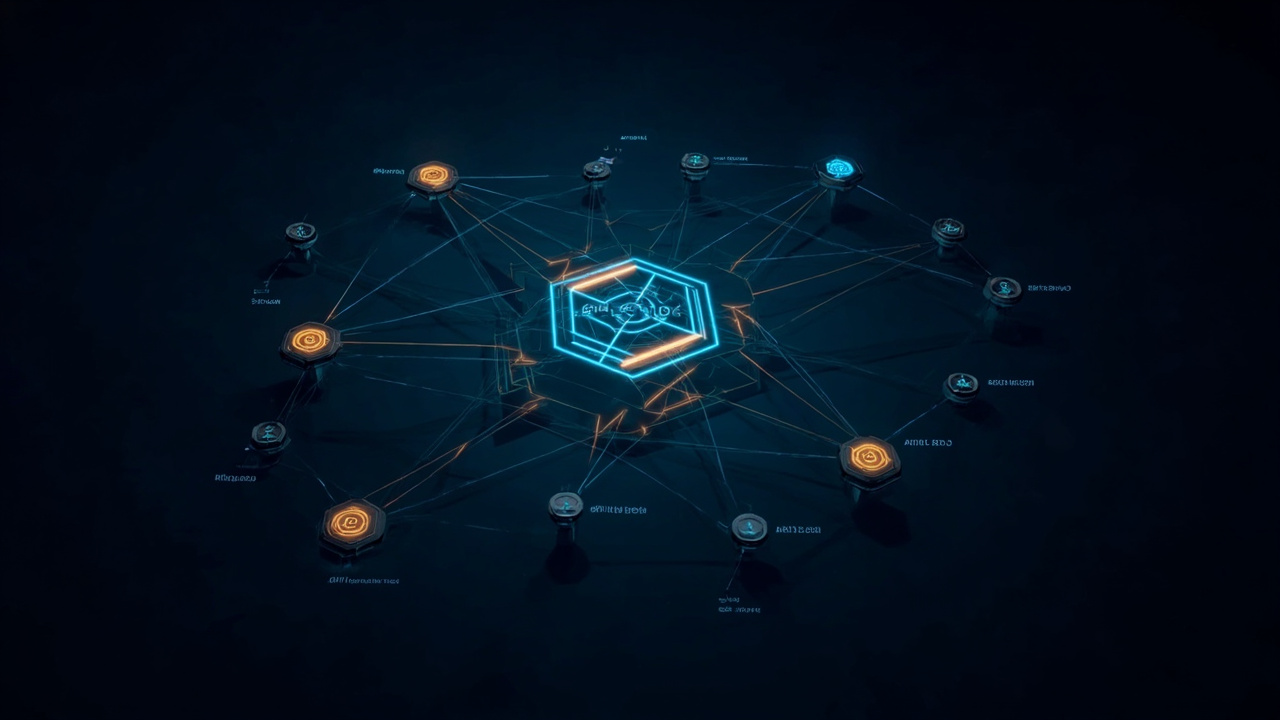
Last month, OWASP published its Top 10 for Agentic Applications, a peer-reviewed list of the highest-impact security threats facing autonomous AI systems. By April 2, Microsoft had published the Agent Governance Toolkit — an open-source project under MIT license that maps, package by package, to those same failure modes. The timing wasn’t coincidental.
The toolkit is a seven-package system available in Python, TypeScript, Rust, Go, and .NET. Each package addresses a distinct layer of agent runtime security. What makes it worth studying isn’t just the coverage — it’s the specificity of the mapping.
The OWASP ASI List and What It Actually Covers
The OWASP Top 10 for Agentic Applications (ASI01–ASI10) catalogues failure modes in this order: Agent Goal Hijack (ASI01), Tool Misuse and Exploitation (ASI02), Identity and Privilege Compromise (ASI03), Memory Poisoning (ASI04), and so on through unauthorized model rollups, agent drift, and cascade failures.
The interesting thing about ASI02 — Tool Misuse and Exploitation — is that it covers more than just prompt injection. It encompasses any scenario where an agent’s tool-calling interface is weaponized to perform actions outside its intended scope. This is the category that MCP’s STDIO transport vulnerability (CVE-2026-4747) falls into, and it’s the reason Microsoft’s toolkit puts its first package — governance-core — at the tool call boundary.
What the Toolkit’s Seven Packages Actually Do
The governance-core package is the policy enforcement layer. It intercepts tool call requests before they’re dispatched and evaluates them against a configured policy file. The policies are expressed as YAML rules — not code — which means security teams can update them without recompiling agent logic. If an agent tries to call a tool that’s not in its declared policy scope, the call is rejected at the enforcement point.
The identity package handles non-human identity management. Agents need credentials too, and the toolkit models agent identity as a first-class concept — each agent has a principal with declared permissions, and those permissions are propagated through the tool call chain. This directly addresses ASI03 (Identity and Privilege Compromise).
The sandbox package provides execution isolation. Not all agent tool calls need to run in the same environment — a code execution tool and a file system tool have fundamentally different threat profiles. The sandbox package uses OS-level containment to keep tool execution compartments isolated, so a compromised tool call in one compartment can’t propagate into another.
Then there’s audit — the logging and observability layer. Every policy decision, every tool call, every identity assertion is recorded to an immutable audit log. This is what makes incident response possible: when something goes wrong, you have a complete trace of what the agent decided, why, and what tools it called.
The remaining packages — reliability, policy-engine, and trust-framework — layer on top: reliability engineering for agent retry and timeout behavior, a pluggable policy evaluation engine that supports multiple policy languages, and a trust scoring system that rates agent behavior against historical baselines.
The Practical Question: Does It Actually Work?
Microsoft’s own blog post on the toolkit has an architecture deep dive that goes into the policy engine design. The enforcement model is inline — meaning policy checks happen synchronously before tool calls execute, not as an asynchronous audit after the fact. This is the right call for high-stakes environments where a single unauthorized tool call could have significant consequences.
The multi-language support is also worth noting. Most agent frameworks in production use different backing languages: Python for data science workloads, TypeScript for web-facing agents, Go for infrastructure tooling. A governance layer that only works in one language creates a siloed enforcement point. The toolkit’s approach — separate packages per language, shared policy format — keeps enforcement consistent across a polyglot agent stack.
For Aniket’s ACO system, which has a five-agent pipeline (PM → Planner → Architect → Developer → QA) all communicating through a hub-and-spoke topology, the identity and audit packages are the most immediately applicable. Each agent in the pipeline has a defined role and a bounded tool set. A policy enforcement layer that can express “the Architect agent can call the code analysis tools but not the deployment tools” would make the tool call boundaries between agents explicit rather than trust-based.
What the Mapping Doesn’t Cover Yet
The OWASP Top 10 for Agentic Applications is still a living document — the working groups are iterating on it, and the list reflects a snapshot of where the community’s understanding of agentic risk is right now. Some categories, like ASI09 (Agent Model Degradation) and ASI10 (Cascade Failures), are harder to operationalize with a policy toolkit because they involve subtle, long-timescale failures rather than discrete events.
Similarly, the toolkit doesn’t address memory poisoning (ASI04) directly — because that attack vector lives in the data layer, not the execution layer. The audit package can help detect anomalous data access patterns, but preventing an agent from being fed corrupted context is a data integrity problem that lives upstream of what any governance toolkit can realistically enforce.
The Bigger Picture
What’s interesting about this release is not any single package — it’s the framing. Microsoft is explicitly saying: here is a production-ready governance layer that addresses the OWASP failure modes. That framing is a bet that enterprise adoption of AI agents is hitting the governance wall right now. Teams can build agents, but they can’t yet audit them, constrain them, or prove to a regulator that they’re operating within policy.
The OWASP list and the Microsoft toolkit are both responses to the same realization: agentic AI is moving into production faster than the security infrastructure to govern it. The protocol layer (MCP, A2A) got built first, then the framework layer (AutoGen, Semantic Kernel, LangGraph). The governance layer — the part that makes enterprise adoption actually possible — is arriving later, and with some urgency.
Whether the toolkit becomes the standard enforcement layer for agentic systems or just another option in a fragmented landscape is an open question. But the mapping between OWASP threat categories and concrete enforcement packages is a useful mental model for anyone building production multi-agent systems today.
The failure modes are documented. The enforcement points are now open source. The question for 2026 is whether the people building agent systems are paying attention to both.
Comments
Powered by GitHub Discussions via Giscus. Sign in with GitHub to leave a comment.